Wednesday, February 15, 2023

St. Kilda

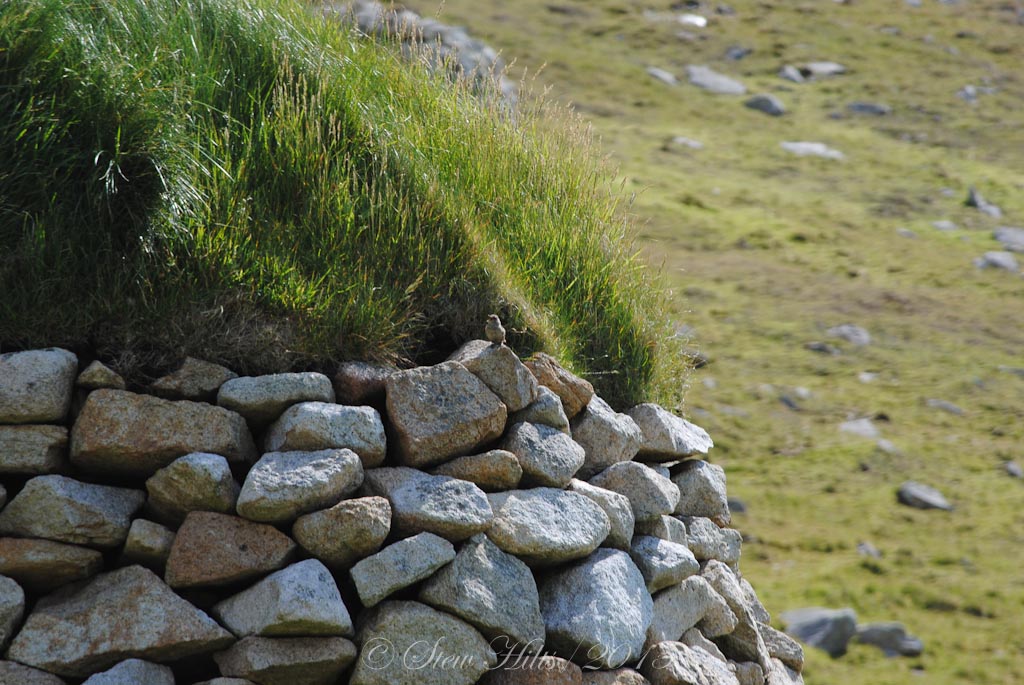
Leaving Barra we headed out into the North Atlantic, looking for the tiny now uninhabited Isle of St. Kilda.  This was our most memorable stop on the entire cruise, and this our most memorable photograph.  St. Kilda has been occupied for thousands of years, though often inaccessible for 6 long winter months.  But the population dwindled to 36 and finally those remaining islanders voted to be evacuated in 1930.

Below Mrs. F.G. you can see the line of old stone houses ringing the bay.  Now owned by the National Trust for Scotland, it is one of very few double World Heritage Sites on the planet, qualified for both its natural and cultural features.

The Trust has restored five of the homes with a secure roof, so you can get a sense of how the village may have looked with its very solid but tiny stone homes.  This 'street' was where the men of the village met each morning to decide on the plan for the day, based on the season and the weather.  Collecting eggs from the cliffs was the biggest and most dangerous work.

You could look inside these, and archeologists were working in one.  It was a simple life, in mostly one-room homes, based on a communal way of living.

We climbed up toward the hills enough to get a view back down over the village.  The stone enclosures were really exclosure, designed to keep the sheep that roamed freely over the island out of the potatoes and barley, and the graveyard.  High on the opposite slope is a scar on the cliff, an ancient Neolithic quarry, probably for making stone tools 5000 years ago.

Dotted all over the island are these small stone 'cleats', rough dry-walled stone buildings roofed with turf.  The breeze could blow right through the cracks, effectively curing the birds hung inside.  There are over 1200 of these on the island.

Cleits were used for storage, of eggs and cured waterfowl, the basic diet of St. Kildans.  Both eggs and birds were collected by scaling the cliffs of the island.  Cleits were also used to store feathers with which to pay their annual rent.

I was checking out the cleits after I saw a small bird darting around.  There was a lot of this 'Thrift' growing on the rooftops too.

Can you spot the tiny bird?

This is the distinctive St. Kilda Wren, a subspecies of the Eurasian Wren, endemic to only these islands.  I was thrilled to spot it, the only place in the world it can be seen.  

And we were both fascinated by the chance to see St. Kilda for ourselves.  We were told that we'd been lucky with weather, it was a beautiful day and the seas were calm, enabling our ship to offload its passengers by dinghy.  We were one of only two of five ships able to discharge passengers so far that year.


Sunday, February 12, 2023

Barra, Outer Hebrides

All too soon we were sailing on to the Outer Hebrides, where we stopped at the southernmost inhabited island in that group, the Isle of Barra.  The island has been occupied since at least Neolithic times, with Stone, Bronze and Iron Age relics uncovered during excavations.  Today the main industry is tourism, so we fit right in!

As always our ship had to anchor offshore and we were ferried in by dinghy.

This sign is in Gaelic as well as English; the Outer Hebrides have preserved the Gaelic language more than anywhere else in Scotland.

The small village of Castlebay welcomed us, with Kisimul Castle in the middle of the harbour in the foreground and Our Lady, Star of the Sea Church in the background, high on the hill.  Kisimul Castle was home to Clan MacNeil, legendary pirates during the reign of Elizabeth I.

The castle sits on a tiny island in the bay, while the 'unsinkable' lifeboat is tied here at the dock, reminding us that seas do get rough and many have lost their lives here.

We got a chance to walk around the village and I remember reading about the knitting of fishermen's sweaters, each pattern slightly different so that their wives could recognize their body in the case of tragedy.

I did walk up the hill to see the church, Our Lady, Star of the Sea, dedicated as the name suggests, to generations of fishermen, though fishing has declined in recent years as tourism has risen.

On the way back to our own ship we got to stop at the castle to explore the ruin.  Mrs. F.G. was interested in the architecture, while I distracted myself from the sad history by looking at things like yellow lichen on the rocks.

For centuries Barra was part of the Lordship of the Isles, subject to Norwegian rule and loyal to the king of Norway.  Following the Battle of Largs, the Treaty of Perth was finally signed in 1266, giving Orkney and Shetland to Norway, but giving the Hebrides to Scotland.  King James I, later in the 1400s imposed his rule on the isles, fed up with their years of clan squabbling.  He awarded Barra to the Chief of Clan MacNeil.

After years of enjoying life as pirates on the high seas, MacNeil sold the island to Colonel Gordon in 1838, and evictions began immediately.  Islanders were rounded up and forcibly loaded onto ships like cattle, because the landlord could make more money grazing sheep (the sheep are still there).  Evictions reached a peak during the potato famine of the late 1840s, with a large number of remaining Barra islanders forced onto a ship bound for Canada.  These were the horrible years of the 'Clearances', 'clearing' the island for sheep!

The MacNeils themselves ended up first in Canada and later in the United States, until a wealthy MacNeil bought the estate back in 1937.  In 2000 his heir leased the island to Historic Scotland for 1000 years, in return for a nominal payment of 1£ and a bottle of whisky a year.


Thursday, February 9, 2023

Iona and Staffa

Leaving Islay we motored north and anchored off the southwest tip of Mull, in the narrow channel between Mull and Iona.  Iona is the most spiritually important site in Scotland, and perhaps in all the British Isles, rivalled only by Canterbury Cathedral.  Here Saint Columba arrived in 563 A.D. with his small band of Irish monks, to found a new church.  Banished from home, he had sailed far enough that he could no longer see Ireland.

The abbey buildings you see today are of course not the original, though some of the lower courses of stone certainly date back to medieval times.  It fell into decay after the Reformation, but was restored in the 20th century by the Iona Cathedral Trust.  The Iona Community is an active spiritual group and retreat centre to this day.

Starting in 1203 an early Lord of the Isles rejuvenated the abbey and also established an Augustinian Nunnery.  We paused here, remembering our earlier trip years before with our daughter and her friend.  I loved the stonework here, the contrast between the pink and the nearly black.

The history of Iona is the history of early Scotland - before it even became known as Scotland.  Following St. Columba's introduction of Christianity to the area, with the blessing of the local king, the tradition of burying kings on Iona began.  There are said to be 48 kings, including a few from France, Norway and Ireland, buried in the church graveyard.  Although such claims are likely in part a myth, the 'Street of the Dead' is still recognized (above) today as a path of stones leading up to the Abbey.


In the early years of this fascinating history, numerous remarkable carved stone crosses were created, this one St. John's Cross.  This is a replica, the original is in the Abbey's museum.  Many were destroyed by Viking raiders starting in the late 700s.

In any case we enjoyed looikng around the Abbey church and the cloisters.  This sculpture in the centre of the cloisters is said tor represent 'Descent of the Spirit'.  Since I had read much of the history, our visit to Iona was absolutely enchanting!

Leaving Iona we motored a short distance north to anchor off the tiny but fascinating Isle of Staffa (a Viking name).  Staffa is entirely of volcanic origin and features both cliffs and caves made up of vertical hexagonal columns of basalt, similar to the formation of the Giants's Causeway in Ireland.

In the southeast corner is the largest cave, Fingal's Cave, named after the 3rd century Irish folk hero.  It became a star attraction in Victorian times, with Queen Victoria herself visiting.  Mendelssohn also made a pilgrimage here and subsequently wrote the Hebridean Overture, inspired by the sound of the waves in the cave.  Look it up on YouTube, it's quite dramatic. 

This site is an Earthcache, a list of geologically significant sites around the world and I needed a picture of myself to prove that I'd been there.  You can see other people on the island, but our captain was erring on the side of safety so this was as close as we got.

Now on to the Outer Hebrides!


Monday, February 6, 2023

Back to Scotland - the Adventure Cruise!

Our second BIG trip to Scotland was just 10 years ago; the kids were grown up and gone, it was just us two.  And we would both say it was the best adventure of our lives!  It was the first big trip of our retirement and the timing worked out so we could combine it with visiting the Chelsea Flower Show in London, which was spectacular!

We had a few days to put in after riding the fast train up to Glasgow from London.  In fact this was our first holiday where I did not drive a vehicle at all.  In Glasgow we took the opportunity to go on a guided day trip, saying hello to some Highland 'Coos' along the way.

We also stopped at the tiny little village of Lusa on the west shore of Loch Lomond and saw these incredible blue poppies growing in a tiny private garden.

The homeowner was right there, so Mrs. F.G. cornered him and got the story of his garden.  He was very proud of these poppies!

We also stopped in Stirling and went up to the famous castle.  I got this photo of Robert the Bruce and across the valley, the memorial tower to William Wallace, Scotland's two greatest heroes, leading Scotland to victory in the Wars of Independence from 1296-1328.  The Wallace Memorial is a Victorian tower, just below the horizon right in the centre of the picture.

If you want to read some fascinating early Scottish history, pick up one of Nigel Tranter's novels, which cover just about every Scottish king.  I started with Robert the Bruce and never looked back; that's where I developed my love of Scottish history.

And talk about Scottish history!  We boarded a bus in Glasgow to drive to Oban to catch our ship.  Along the way we stopped at Glencoe, one of the most infamous and tragic places in Scotland.  In Feb. 1692 Campbell forces billeted with Macdonald families in the glen, upon receiving orders from the king, fell upon their hosts and killed 30 members of the clan; others fled into the hills and died on the snow-covered mountains.  It was all about swearing an oath to the new king and queen, William and Mary, but it became a symbol for Scottish independence.

We did get to Oban and boarded our ship, excited to begin our cruise.  That's one of the Caledonian MacBrayne ferries that serve all of the Hebrides docked across the harbour.  We set sail out into the Inner Hebrides, down past the mountainous Isles of Mull and Jura to relatively flat Islay (pronounced aisle-aa).

Our ship was a small one compared to most of the larger cruise ships, with only 100 or so passengers.  We could all gather at once in the dining room where we had our first meal and our welcome speech.  It was an Adventure Canada trip, so most passengers were Canadian; they have a very good reputation for adventurous educational trips.  I would whole-heartedly recommend them.

The next morning, having anchored off Islay, we were transferred ashore in dinghies and had to walk some distance to the ruins of Finlaggan, the seat of the Lordship of the Isles in the 13th and 14th centuries, down on that island in the loch.

Finlaggan Castle was really a fortified house and meeting place for the Lords of the Isles rather than a defensive castle.  Recent archeological work has unearthed 16th century graves that are now protected by glass panels.  The history of the spot, where Clan Donald first rose to power, is amazing. 

At this point we felt that our trip was turning out very well indeed!  Much more to come. 


Friday, February 3, 2023

Our Snowstick

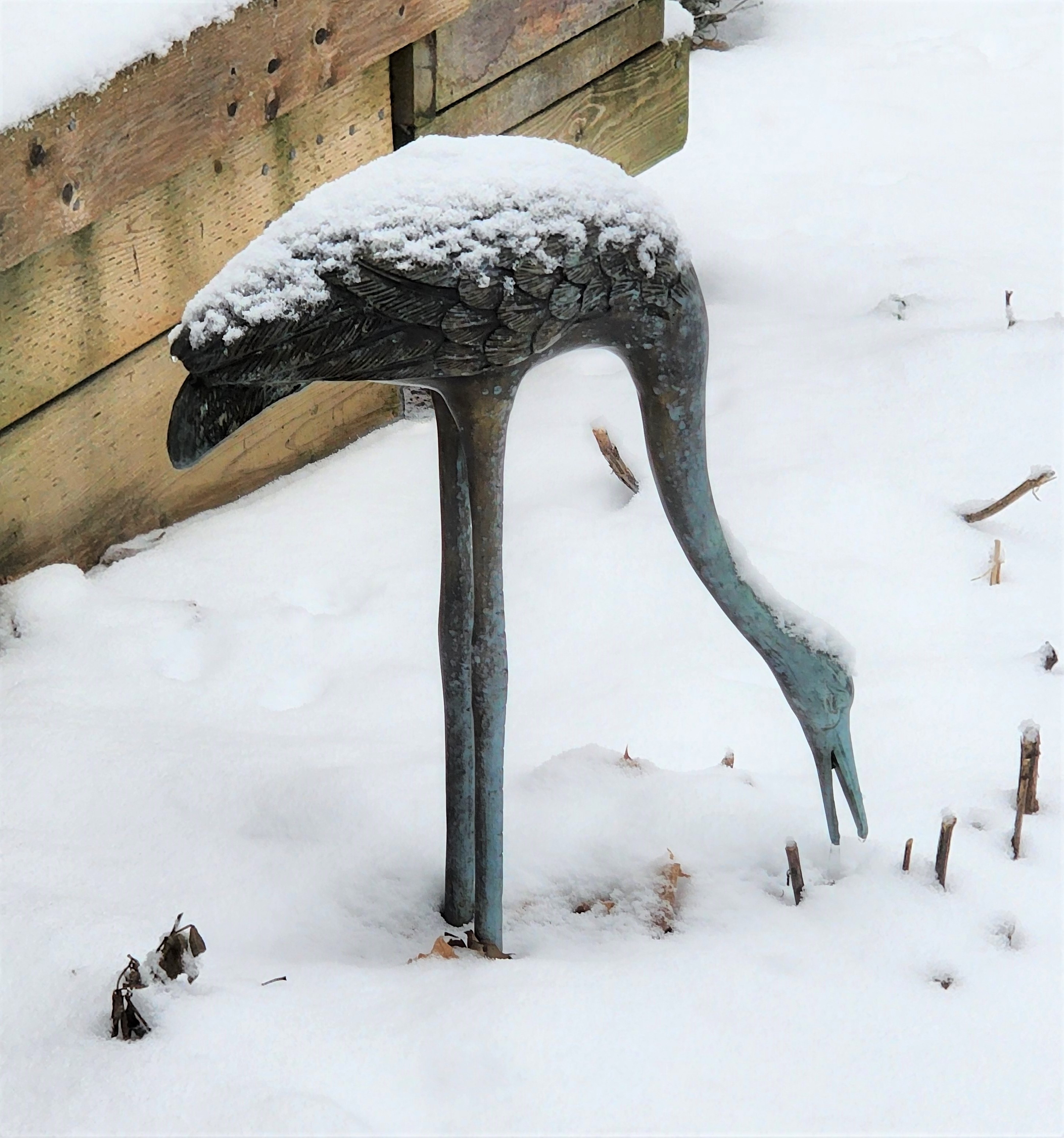
Our trusty garden crane (now ostrich) has been working overtime as a snowstick, and the snow is piling up.  Thought we should take a quick look before returning to Scotland.  It's bitterly cold here, at -21C (-6F), with the windchill pushing it to -30C, but it's supposed to be just above freezing most of next week.  Crazy winter!

No need to pause, just scroll through these quickly.

Jan 23rd
Jan 24th
Jan 26th
Jan 29th
Feb 1st
Feb 3rd

And just to remind you, this was Jan 19th


Thursday, February 2, 2023

Robbie Burns and Haggis!

I don't get many chances to eat haggis, Scotland's national dish, but a week ago was Robbie Burns' birthday and the local Anglican church had a Burns Dinner, complete with haggis.  Who was Robbie Burns you ask?  If you have to ask, obviously you're not Scottish!  Robbie Burns is Scotland's best known and most revered poet.  Living only 37 years in the late 1700s, and writing in the Scots vernacular, Burns' birthday was on Jan. 25th, so wherever Scots have settled, Burns Dinners are held to celebrate.

The dinner follows a traditional and sometimes very formal sequence, with the haggis piped in to start the affair.  The haggis bearer precedes the bagpiper into the room, though I almost missed that haggis in my photo!

Our host confronted the haggis, reading for the assembled throng 'Address to a Haggis' by Burns.  It begins:

Fair fa' your honest sonsie face,
Great chieftain o' the puddin'-race,

and extends 48 lines to the end before we can eat.  At the appropriate moment our host stabbed the haggis open, ready to serve.

There followed the toast to the haggis.  I think both the haggis bearer and the piper had something other than tomato juice in their glasses!  If you look closely you'll see that the piper is not drinking from a typical small toast glass either.

This is that traditional Scottish drinking bowl, a 'quaich'.  No tomato juice in there!

As Mrs. F.G. would say, put a man in a kilt .... he kindly posed for her.

And here finally is our delicious Burns dinner, roast beef, veggies and haggis.  I skipped the potatoes so I could get a double serving of haggis!

And for all of you who want to know, haggis is composed of minced beef and oats mainly, with a chunk of suet, and the heart, lungs (some would say tongue) and liver of a sheep (a combination called 'lamb's pluck), all stuffed in a sheep's stomach or ox bung (essentially a very large sausage casing).  It looks like a round nicely browned loaf of bread until it's cut open for serving.

Burns' best known poem is undoubtedly 'Auld Lang Syne', sung all over the English-speaking world on New Year's Eve, to bid farewell to the year past.  Even if you don't recognize Burns himself, you probably know that poem - though I bet you don't know the second and third verses!


Wednesday, February 1, 2023

One Million Views! Thank you!

Yeah!!!  I've  passed 1,000,000 views on my blog!  Thank you all so much.  I passed the mark sometime overnight, though I've been watching it get closer and closer this month.  Makes me feel it's all worthwhile.  Though of course it's the quality of those viewers rather than just the number who count.  And you're all very dedicated, loyal viewers.

I've received those views based on over 2500 posts over about 12 years, and you've made over 36,000 comments!  Your comments matter more to me than just the views, 'cause that's what keeps me on track.

If I have any regrets it's that I don't comment on your blogs as much as I should.  Most of the fingers on my right hand were amputated when I was in the hospital (caught sepsis - toes went too) so I'm typing with my baby finger and can't go very fast!  Please forgive me.

So raise a toast of thank to yourself for helping me get this far!  Thank you all again.