Wednesday, June 29, 2011

Swallowtails

It's ridiculously cool today, about 10 degrees this morning, and wet, but a few days ago in the warm, the swallowtail butterflies appeared, as they seem to every year. Apparently swallowtails don't migrate, and the pupae can overwinter, so once it warms up in the spring, the butterfly can emerge.

They fly back and forth, up and down, meandering from flower to flower, fluttering in the breeze. They seemed to really enjoy the lilac blooms, going back to those repeatedly. One also sat still on a 'wooden heron' we have, enabling me to get some good pictures.

Saturday, June 25, 2011

Yellow Flowers in June

The meadow is at it's best in mid-June, and I'm amazed when I walk the trails early in the morning, at the number of yellow flowers. In the early morning sunlight (though it's a rainy day today), the king devil or yellow hawkweed open up to gather in the sun's rays, and as you walk around, their yellow blossoms are everywhere. It's not quite a carpet of yellow, but thousands of yellow stars among the grasses.

In places there are lots of buttercups too, one of our well-known summer flowers, along with the daisies. Their tiny yellow blossoms also open up in response to the sun's rays.


There are the yellow daylilies that I rescued where they had been dumped in the ditch, and planted out near the road at the back of our house. They have fought off the competition of the long grasses and are blooming nicely.

There are even bits of escaped bird's foot trefoil, spread from hayfields, and now naturalized here and there along the roadside.
All in all, it makes a walk through the meadow on an early sunny morning a special treat in June.


Wednesday, June 22, 2011

Mackerel Sky for the Summer Solstice

Looked up at the sky the other evening, just after the sun had disappeared behind the trees, and the sky was mottled with a 'mackerel' pattern of small altocumulus clouds, scattered across half the horizon. Seemed like an interesting sight to mark the summer solstice, since we're not planning any bonfires or midnight dancing to celebrate here!

I'm not sure that a mackeral sky foreshadows any particular type of weather, but I did find a saying - 'mackeral sky; three days dry'. We only got two dry days after it, but we did get a lot of garden work done in those two days.


The summer solstice is a time of year when crops have been planted, the weather is warm, and we look forward to the future harvest, even if the days start getting shorter now. Awake at 1 a.m. last night, on the shortest night of the year, it wasn't really even dark. Both the garden and the meadow are bursting with life now, flowers blooming, birds raising young, and the summer insects beginning to call.

Summer solstice is one of those landmark days if you're paying attention to the seasons, and has been for thousands of years. It reminds me of the giant stone circles in Scotland, where there likely were people celebrating at midnight earlier this week, and for thousands of years before. These photos are of the standing stones in the Ring of Brodgar, where we visited two weeks ago. You quickly start imagining the world 5000 years ago when you stand among these stones. There is some suggestion that this stone circle was known as the 'Temple of the Sun'.


Monday, June 20, 2011

Summer is Here!

We missed a month! Enjoyed a spectacular trip (to the outer isles of Scotland), but missed a month at home when the world burst into green everywhere. We left when the leaves were barely coming out, and spring flowers were blooming both in the garden and the woods. We returned to grass 3 feet tall in the meadow, hawkweed, buttercups and daisies everywhere, and peonies and iris in bloom in the garden.


I love the bright green of the leaves in spring and early summer. When the leaves are still unfurling, and the sun shines through them in the early morning, they are almost fluorescent. Watching over the seasons the unfolding of leaves on our deciduous trees really is an amazing transformation, which we totally take for granted every year. And the shade and cooler temperatures under the trees make my favourite sitting spot.


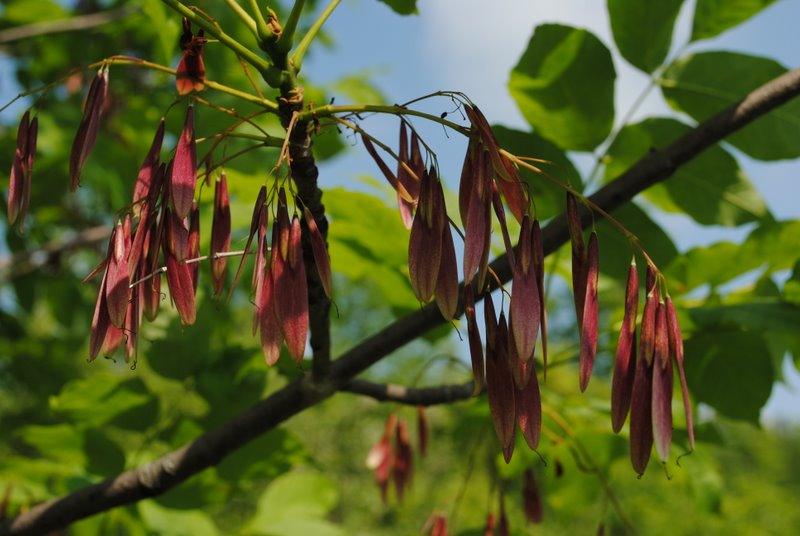
It appears that it's a very heavy seed crop on the white ash trees this year, with thousands of keys already hanging from many of the ash. I wonder what the trees know that we don't. And I've heard that the Emerald Ash Borer, which can devastate entire forests of ash trees, has now reached Guelph. I can't imagine this place without ash trees. We would lose half our large trees, and virtually all of the younger trees growing up by themselves. Natural succession in this landscape is driven by young ash; without them who knows what the landscape will look like.


Tuesday, May 17, 2011

Walk in the Woods in May

The single nicest time of year to go for a walk in the woods is in early May, before the leaves (and the blackflies and mosquitoes) come out. A rash of early wildflowers, the spring ephemerals, blooms before the canopy of leaves closes off their light. We hit the Bruce Trail nearby twice last week on warm sunny spring days, and the photos here are the result.

Red Trillium, one of my favourites


Dog-tooth Violet or Trout Lily


Wild Ginger


Spring Beauty


Dutchman's Breeches


The wierd purple leaves and tiny flower of the Blue Cohosh, which will soon turn a normal green colour.

Tuesday, May 10, 2011

Spring Flowers in the Garden

Spring is in full swing, my favourite time of year. My real love is wildflowers; a walk in the woods on a sunny day in May is just a joy. But the remarkable sudden growth of flowers in the garden is also a sign of the season. And after the undergardener has put so much time into shovelling, digging, transplanting, spreading mulch, moving rocks, etc., it's nice to see the actual flowers appear!


Crocus are among the very first, along with snowdrops, just after the aconite.


Daffodils bloom a little later, and we don't have any in the garden. But one small group got moved by accident thanks to some industrious squirrels, and it provides a handful of bright yellow blooms along the fencerow.


Varieties of early primrose, one of the first to add different colours to the garden.


These leaves you probably don't recognize, but they are so interesting I just couldn't resist. They are the fern-leaf peony, which will bloom soon, but the leaves themselves provide a fascinating pattern, rising very early out of the dirt.

Sunday, May 8, 2011

Turkeys!

We see wild turkeys quite regularly as we drive around the landscape of the Beaver Valley region, all year round. They clean up the soybean fields in the fall; they walk steadily in single file out of the woods and across the roads in winter; and they gather in small flocks in the fields in spring. I've been wanting to get a picture of these incredible birds, so imagine my surprise when I looked out the window just 2 or 3 weeks ago and saw several turkeys! Just 30 feet away, walking slowly into our backyard!


The female hens led the way, picking at the grass as they walked. Wild turkeys are huge birds, and although they do fly quite well for short distances, I find myself wondering how they actually get off the ground. I know from stories I hear though that when a wild turkey bursts out of the undergrowth beside you and you aren't expecting it, it's a noisy burst of wings!


These turkeys worked their way slowly across the yard, a typical small flock of 5 hens and one tom; the hens led the way toward the further fencerow and the tom followed, stopping occasionally to fluff out its tail and look ferocious. It's 'beard', made of modified feathers, also shows up in this picture.


Wild turkeys have been one of the wildlife management success stories, perhaps even too successful, as they eat grain on farm fields. They were almost extirpated from Ontario, and re-introduced over ten years ago. The re-introduction has been so successful that there is now both a spring and a fall hunting season for turkeys.