Wednesday, August 16, 2023

Monarchs!

Every year we allow a few Milkweed plants to grow in our garden, hoping they will attract some Monarch butterflies, and they do.  This year is no different, and with diligent searching Mrs. F.G. has found a young caterpillar or two.  We didn't catch every stage of the process, but I caught one of the Monarchs just after it had emerged.

Here is the new butterfly, resting on an old Iris leaf.  It took me a long time to get it clear in my head, but although Monarchs only lay their eggs on Milkweed leaves, they will feed on any available flower, so our garden has both.

This was one of the first Monarchs I actually saw and photographed this year, resting on a Butterfly Weed blossom.

And this was the first view of a caterpillar Mrs. F.G. found.

She did capture a little closer view of it.

And this is the butterfly just after it had emerged and found a place to sit while exercising its wings.  I watched them alternately folded up and spread wide for quite a while.  That's how another year's cycle of Monarchs goes, quite special to us.


Sunday, August 13, 2023

August Crops

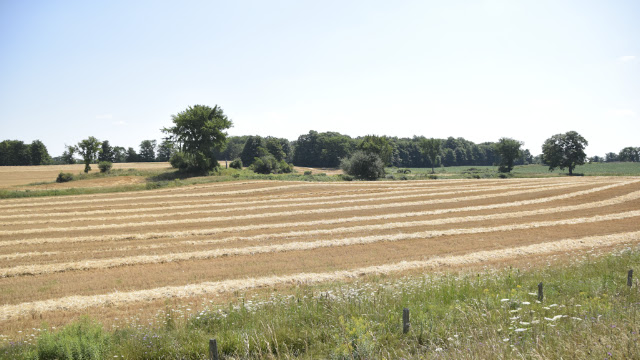
At this time of the year I'm constantly noticing the crops as they mature around here.  As older farmers retire, quite often farms get turned over to cash crops, and the big three here are corn, soybeans and wheat.  The wheat harvest definitely marks August and I managed to get a few pictures on our drive to Keady Market.

The corn is ripening nicely now, with lots of tassels on this crop.  Almost all of the corn grown here is field corn, intended for animal feed, but some of it may be ground up for silage while other times the cobs will be harvest for grain, that harvest usually being the last crop harvest of fall.

At this time of year soybeans are just a rolling field of green, soon to start turning yellow.  Only the beans are eventually harvested, for canola oil.

But it's the wheat harvest going on now, often harvested by roving crews with huge combines, so farmers don't have to buy their own frightfully expensive equipment.  I didn't catch a combine at work this year, so this one is from the past.  With equipment this big it is quick work to finish a field, so I've had to be lucky to see one actually at work.

After the combine has gone through harvesting the grain, only the stems of the plants are left, but they have to be raked into rows before the straw can be baled.  Straw has low nutritional value because the grain (with all the protein) has been separately harvested, unlike hay where all the seeds of the grasses are included, making it better feed for cattle.

Once the straw has been raked it can be baled.  Around here it's usually baled into large round bales, often just because the farmer has a large round baler and that's what they're used to handling.

Then they are laboriously gathered in rows so they can be easily pick up and loaded onto wagons for a ride back to the farmyard.  Large round bales of hay usually get wrapped in white plastic here, to protect them until they're used for feed, but straw is often left unwrapped and just used for bedding, only fed at the end of the winter if the farmer runs out of hay.

So that's a quick look at the big three cash crops around here.


Thursday, August 10, 2023

The Keady Market!

The Keady market is a fixture around these parts, crowded, huge, and filled with everything from genuine local veggies to sunglasses and used clothing.  I find it a little claustrophobic to tell the truth, and in my heavy chair I have to be very careful to avoid running over toes!  We did NOT go for sunglasses or clothing , but just for a few key veggies that Mrs. F.G. wanted because she was going to make relish.  At this market she could get the quantities she needed, high quality, fresh and at a good price.

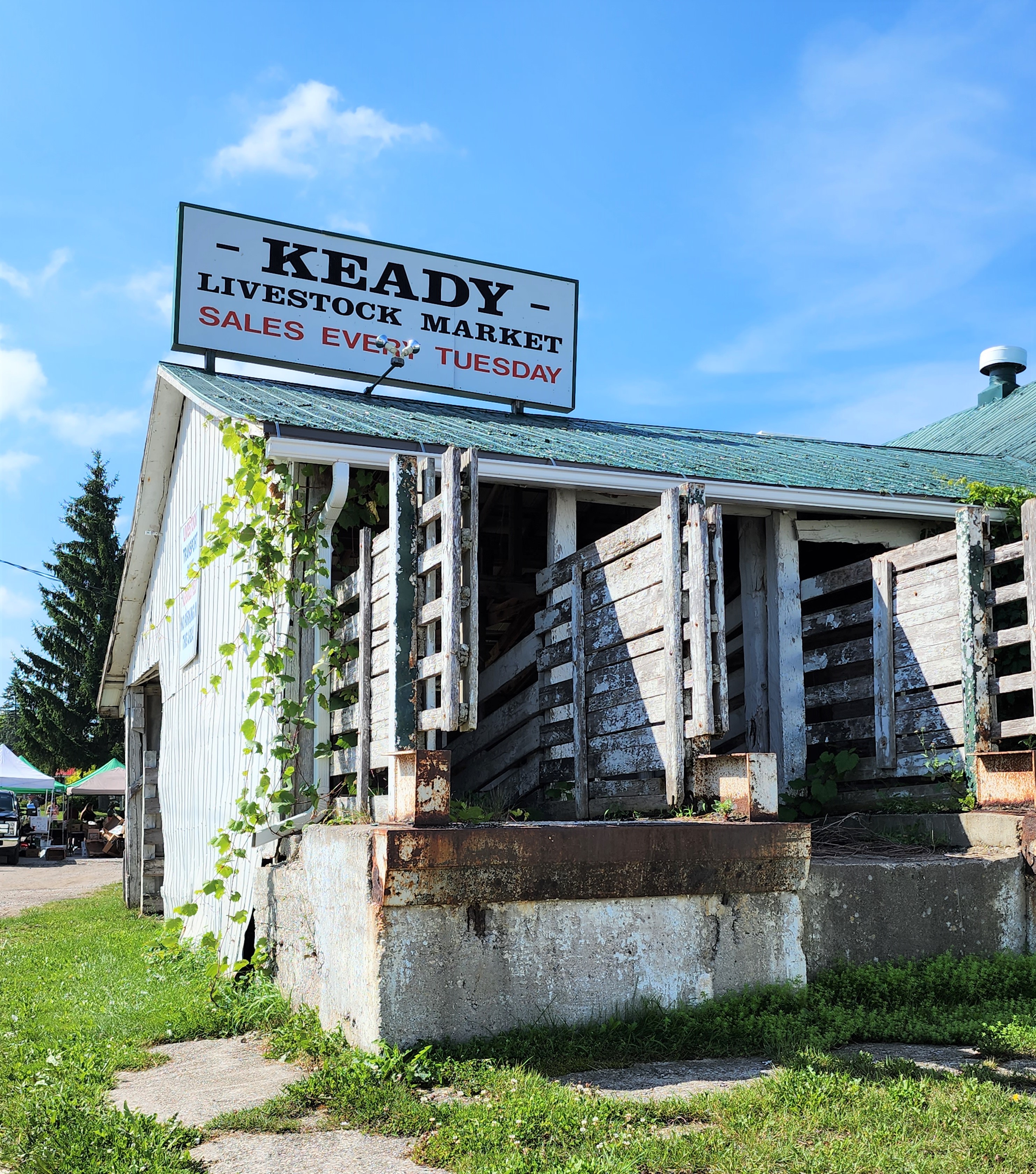
The market, only held on Tuesdays, grew up around a livestock market. a sales auction where farmers could buy and sell livestock, mainly cattle.  As you can see they no longer use these old loading docks.

It was the veggies we were there for, and in the end Mrs. F.G. only went to about four farmers.  We ignored the other 300 or so vendors.

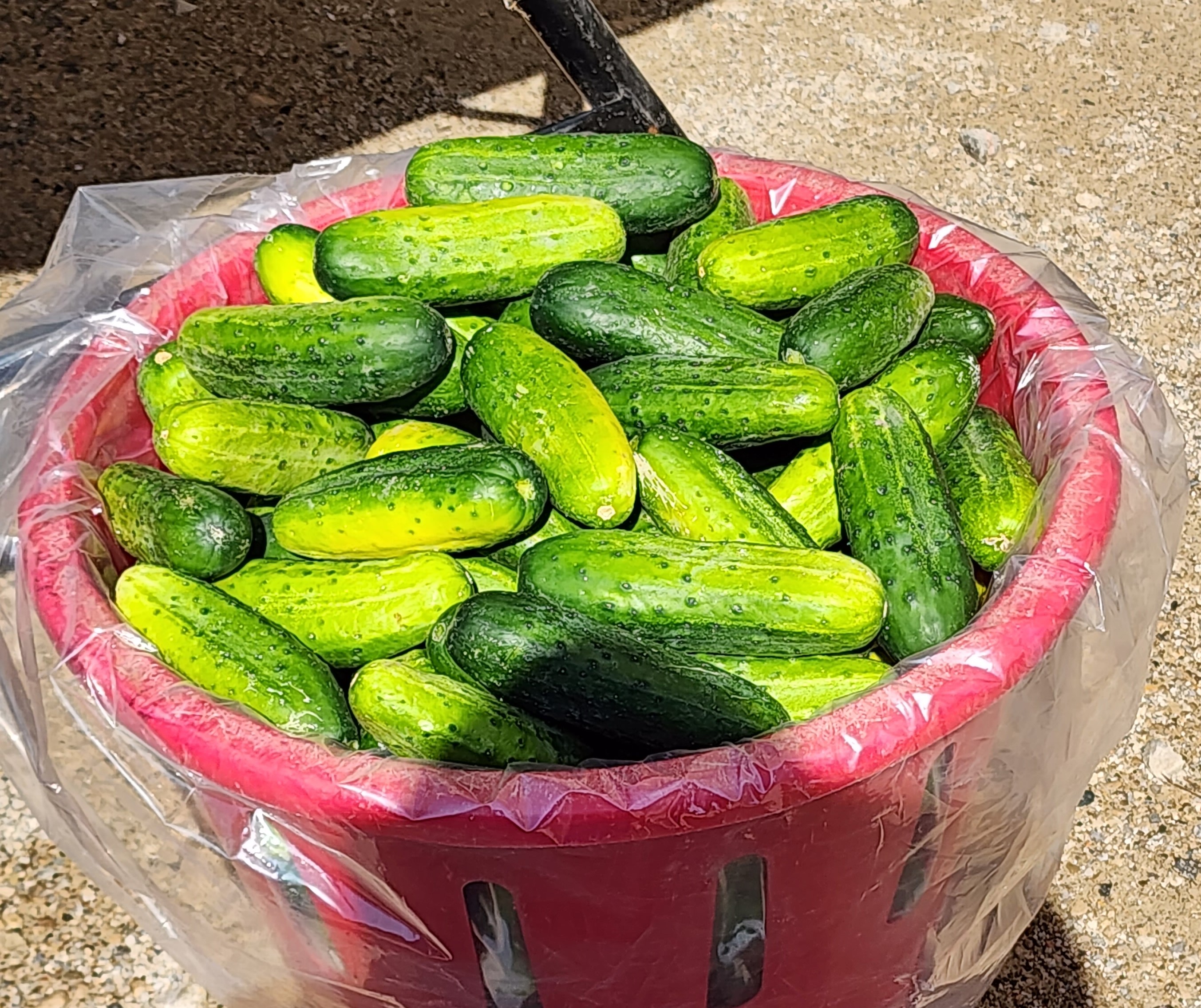
It's pickling season here, so cucumbers were available in large quantities, and just the right size to make great pickles.  These are perfect size for dills.

I guess some people make bean pickles too, or freeze beans for use in the winter.

There were of course the extras you needed, like giant onions and big garlic heads.

There's lots of fruit at the market, the best of it brought up from the Niagara region, our main fruit growing area.

Some good looking maple syrup too.

And a bit of live entertainment.  As you can see I got to wander while Mrs. F.G. sought out the best veggies,

This was her haul once we got home, cukes, peppers, a giant cauliflower head, a big onion and the garlic (and a few cherries for me).

And this was the relish, 24 hours later!  We enjoy this relish; it has no tomatoes, and tastes like real relish!


Tuesday, August 8, 2023

Summerfest in Meaford and the Air Show!

Two years ago someone among the downtown businesses came up with the idea of 'Summerfest', a day of special events and sales in downtown Meaford.  It caught on and this Saturday was the highlight of thing this year, sales of all kinds along the main street, and a car show, jeep show and air show down at the harbour (which is only one block east of the main street).

I could not have ridden my wheelchair along the main street if I tried, so I just headed for the harbour, especially to see the air show.  And it was a gorgeous day!  While I was waiting I walked along to see the various cars on show.

This is a 1968 Morgan, a British car make popular among sports car enthusiasts.  Morgan is the company that started out making three-wheeled cars in 1913, and recently re-introduced a three-wheeled model starting in 2011.  They pride themselves on craftsmanship and only produce 800 vehicles a year.

This on the other hand is a jalopy of some kind.

You can tell some of the features on this old truck are not original, from the low profiles to the red bumper.

This 1927 Ford Roadster Model A though, is original, or at least 95% so according to its owner.  This owner, who I had the chance to talk to, restored the vehicle over the past five years, and puts several thousand km. on it each summer.  The spoked wheels, silver bumper, side-opening engine and big headlamps all spoke 'Model A' to me.

This roof rack on a totally modern pick-up struck me as one of the other interesting things on display.

Sponsored by the local gastronomic extravaganza The Dam Pub, Gord Price is a retired RCAF fighter pilot and airline pilot who is also a Canadian Unlimited Aerobatic Champion, flying a Yak-50.  I've borrowed the image below from the website of the Canadian International Airshow.  

He made numerous passes across the waterfront, often climbing straight up into the sky and plunging back down.  I had no idea of the complexities behind organizing this, from the weather to closing the air space to closing the water space, but it was certainly a crowd pleaser!


Sunday, August 6, 2023

More Summer Wildflowers

Here's another group of summer wildflowers, or as some would say 'weeds'.  They're not weeds to me, they're simply more beautiful flowers, though these ones don't have to be pampered like garden flowers.  This group includes the later blooming flowers that you see mainly in August/September.

The first is Knapweed, with its intricate mauve bloom right at the end of our street beside the mailbox.

And just 50 feet further along are these Garlic plants, starting to form seeds. with the lovely shape of the scapes - in this case obviously a garden escape.

Queen Anne's Lace is the queen of these late summer flowers, the flower that was used in my mother's bridal bouquet - how could we possibly call it a 'weed?

Queen Anne's Lace was first described by Linnaeus in 1753, at which time the most recent Queen Anne would have been Queen Anne of Great Britain, who reigned from 1707-1714.

This is an unusual flower, native to the prairies and called Cup Flower.  Here it's actually growing in a garden.

The plant is quite tall, over 6 feet, with lots of leaves and the small yellow flowers at the top.

And this close-up of the leaves where they come off the stem shows the 'cup'.  The leaves usually grow in opposite pairs, and where they grow the opposite leaves are fused together forming a tiny depression which catches rainwater.

Sweet Peas are one of the most colourful of the summer wildflowers.  Often we see them overflowing the ditches around here.

Wild Sweet Clover is the last flower I have for you, almost impossible to get a completely clear picture of.  Like the photo of Queen Anne's Lace above, here a combination of white and the blue of Chicory.


Wednesday, August 2, 2023

More Day Lilies

The Day Lilies, the biggest highlight of our garden at this time of summer, are going strong.  We've got a range of colours, but there are more subtle differences between the varieties too.

As you know I like bright colours, so I like this two-tone orange one, one of the later bloomers.

But the dark purple one is my favourite.

We've got a number of other orange ones too.

These yellow ones illustrate some of the subtle differences.  This one has a darker centre and wiggly edges to the wide petals.

This one on the other hand has darker edges, also wiggly.

But this one is just pure yellow, with no wiggly edges, and the petals are narrow and longer.

Finally this picture shows you how Day Lilies keep on blooming, one bloom a day.  As you can see there are lots of buds on this plant, enough to keep it blooming for quite awhile.  This is typical of Day Lilies, as only one bud opens a day..

Hope you're enjoying the summer!