Monday, May 9, 2022

Spring Wildflowers in the Woods

If there's a time of year when I miss being able to get out in the woods, it's the month of May.  This is the month when the 'spring ephemerals' bloom, those beautiful wildflowers that take advantage of about three weeks when it's warm enough for them to grow but the tree leaves aren't out yet.  Lots of light can get to the forest floor and these plants love it!

The forest floor is quite bare when the spring wildflowers first appear, and the canopy is still open, though the tree leaves are starting to unfold giving a green tinge as you look up.  It's a unique short period in the seasons of the year.

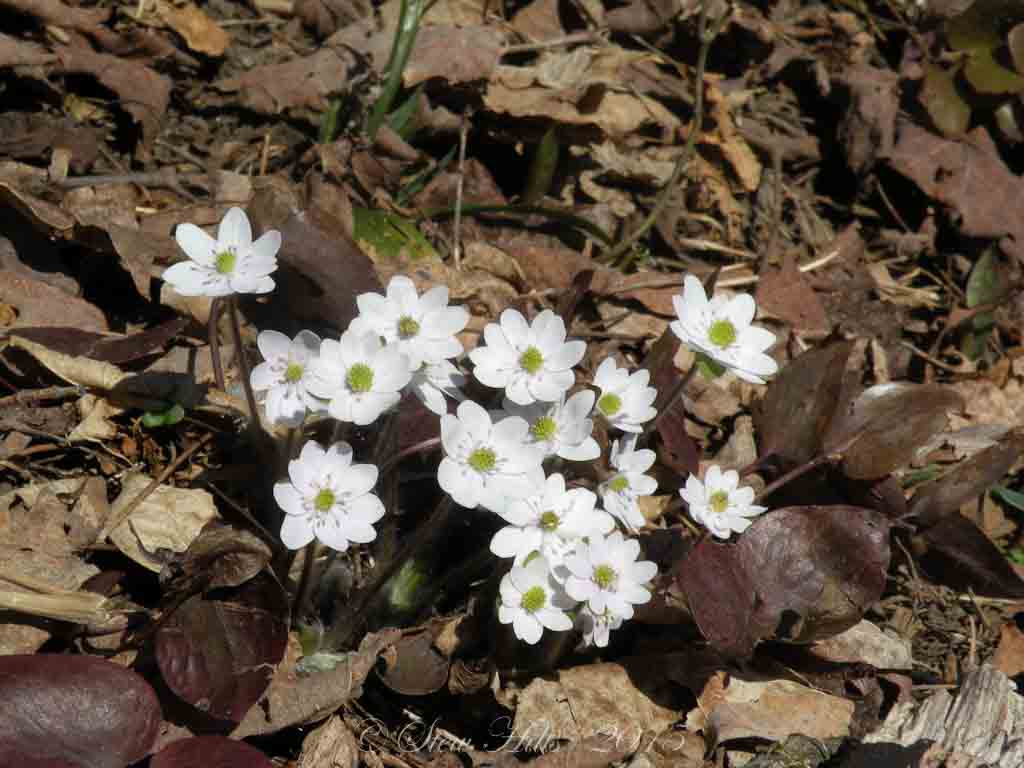
The Sharp-lobed Hepatica is usually the first of these woodland flowers to bloom around here.

Spring Beauty blooms shortly thereafter, along with several others.

Dutchman's Breeches is one of these early bloomers, the flower said to look like a Dutchman's breeches hanging on the clothsline.

Squirrel Corn has identical leaves, but quite different flowers.

One of the most unusual, and therefore one of my favourites, is the deep purple Blue Cohosh.  It grows so fast during the first warm days in May, literally 3-4" per day, that you can practically see it grow.  And no, I didn't arrange these in front of the boulder, they just grew that way!

And finally the widespread Trout Lily or Dogtooth Violet adds a splash of yellow with its flowers.

I point these out now because if you want to get out in the woods and see them, you need to go now.  By the time the Trillium are out in about two weeks, the first of these will have faded away.  They are 'ephemeral' indeed!  I'll follow up with a second post in a day or two.


Saturday, May 7, 2022

The Fox!

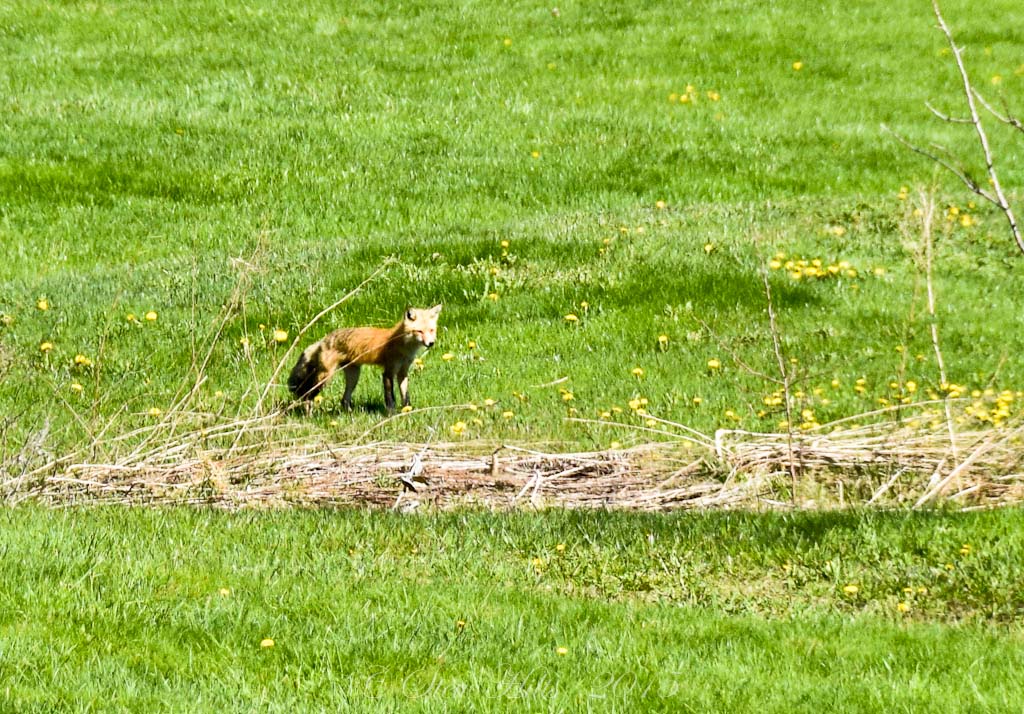
I'm glad to report that our resident fox is back.  Mrs. F.G. has spotted it more than once and this morning I saw it, first only partly visible below a rise, and then trotting across the golf course.  We're hoping it will keep the destructive little rabbits in check!  One is repeatedly trying to dig under our shed.

All of these pictures are heavily cropped, but I thought they came out pretty well regardless.  At least it does look like a fox.

The fox passed behind one of the big old Sugar Maples, in front of one of the golf greens, headed west.

It appeared to be hunting as it went, keeping its ears and eyes alert.

At least two of the neighbours report that they've seen kits, like last year.  Unfortunately those same two neighbours report seeing families of baby rabbits in their gardens too.

It turned around to sniff at something in the grass, but didn't appear to catch anything.

If I got a portrait of the fox, this would be it.  I cropped it as much as I felt I could, but even with the big camera it gets blurry.

Then it trotted on and disappeared into the small valley on the far side of my view.

I'm getting out for rides every day now, even though it's still a little cool for my built-in thermometer.  At least it's sunny and we have a week of sun and warm temperatures forecast.


Wednesday, May 4, 2022

A Longer Wheelchair Ride

The other day it was warm enough that I bundled up and headed out for a ride here in town.  I went down Nelson St. West, a street I almost gave up on last year because of the 'alligator pavement' which gave me too much discomfort.  This year it wasn't bothering me so much, for whatever reason, so maybe I'll be able to ride down here more often.  Maybe I'm just learning to tune it out.

This house is just around the corner on Collingwood St., and this is the place that I got the idea of planting Daffodils out front at our place.  They just seem so incredibly welcoming for spring.

Starting down Nelson West I passed this house which sold last year.  It appears that the new owner has spent the past several months renovating the house and he's getting to the end of that stage.  It looks well done to me.  This is one of those five homes on the street over 100 years old built in the original gothic revival cottage style.

One of two old tractors on the street which are most visible in April, and probably haven't moved in more than a decade.

One of the other oldest homes, with another nice Daffodil display.

Where they cut down a huge old Sugar Maple last year I was astonished to find a large dense patch of Bloodroot, one of the earliest spring wildflowers in the woods.  The old maple must have cast enough shade to provide for good growing conditions.

And just around the corner at the end of the street, my favourite building on the entire ride, this small old barn.  It's about the size of my grandparents barn, but much better maintained.  Unusually it has an above-ground brick foundation.  Probably just the size for 3 or 4 horse stalls and storage for hay above, from the days a century ago when many still kept a horse or two for transportation.

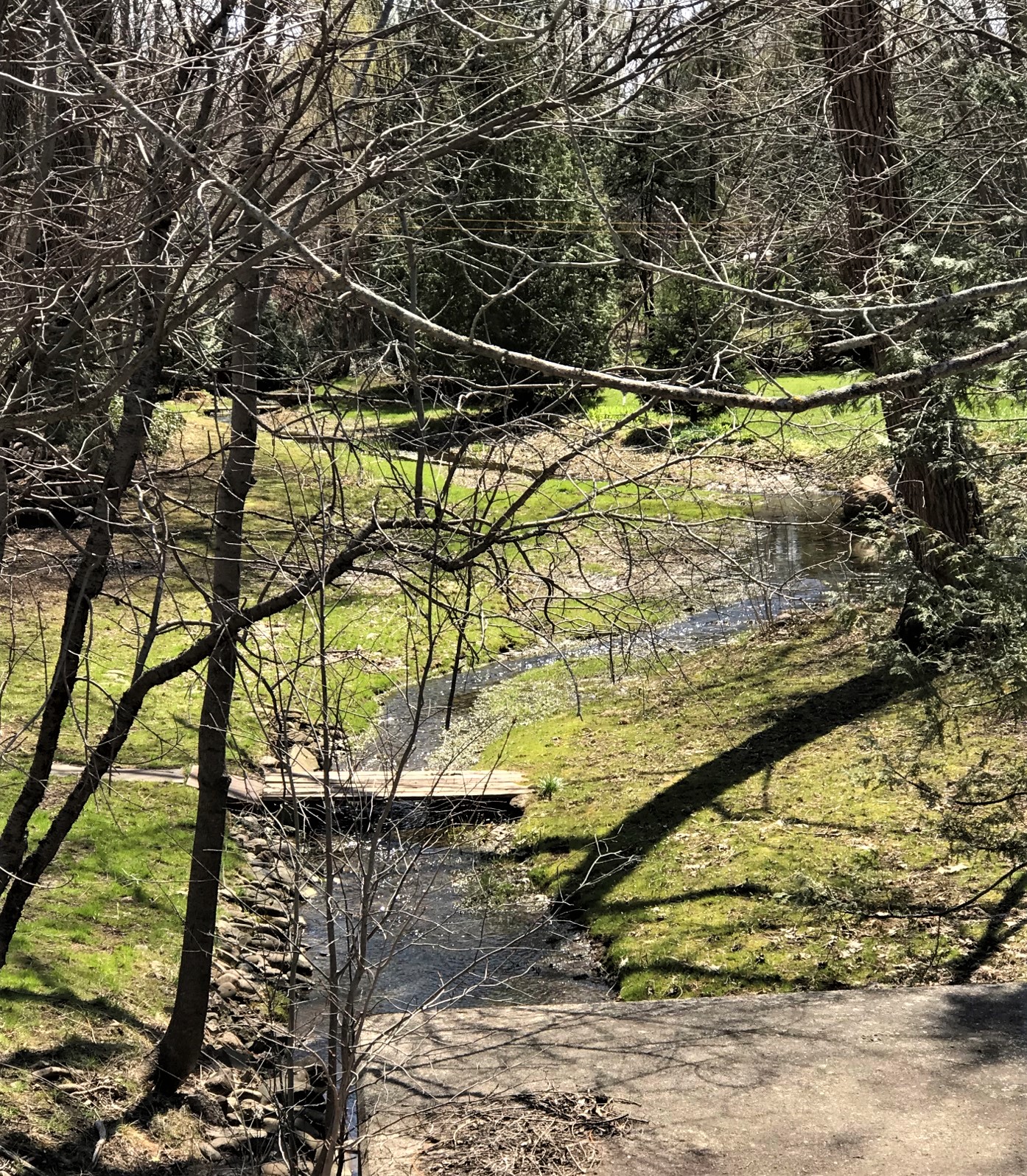
Heading back home I stopped to get a photo of the small stream valley just before the corner.  And that was the end of my ride - just getting warmed up for summer!


Sunday, May 1, 2022

We Finally Heard the Spring Peepers!

To finish off our Sunday afternoon drive we continued our search for Spring Peepers, Skunk Cabbage and Sandhill Cranes a little further west and south.  We drove up the long Epping hill, straight ahead (past the spot where I was stopped during a pot bust a few years ago), to the 7th Line.  Then left two concessions and further west on the 13th Sideroad.

We quickly spotted the Skunk Cabbage, just about spring's earliest flower around here, with its deep purple hood known as the 'spathe' covering the tiny flower inside.

The green leaves have started to emerge on this plant.

But on the opposite side of the road the bright green leaves were much more obvious.  They grow quite large, and yes, the plant has a definite 'skunky' odour.

We drove on past this set of beehives all wrapped up for winter.

And came to Wodehouse Creek, which I've written about often in the past.  This was always one of my favourite spots to stop and wander, watching for birds in the past.  There's a large beaver pond/wetland just upstream, and there used to be a beautiful stone barn foundation in the back centre of the picture.  The Conservation Authority, which owns this property, sold it to be dismantled stone by stone and rebuilt for a new rural garden feature somewhere!

Around the corner we found Wodehouse Creek again, just a mile upstream.  It arises in a large spring just a few hundred yards upstream, and falls into the Wodehouse Karst about 4 miles downstream, emerging along the escarpment as a series of springs.

This is a totally nondescript view, but it's a spot just 200 yards up the road where we finally heard the chorus of Spring Peepers, one of the iconic sounds of spring here, and a sound we both love to hear.  And it's where we listened for Sandhill Cranes, but unsuccessfully.  We have heard them here before in the fall.

Several beautiful farms along this stretch of the 9th Line.

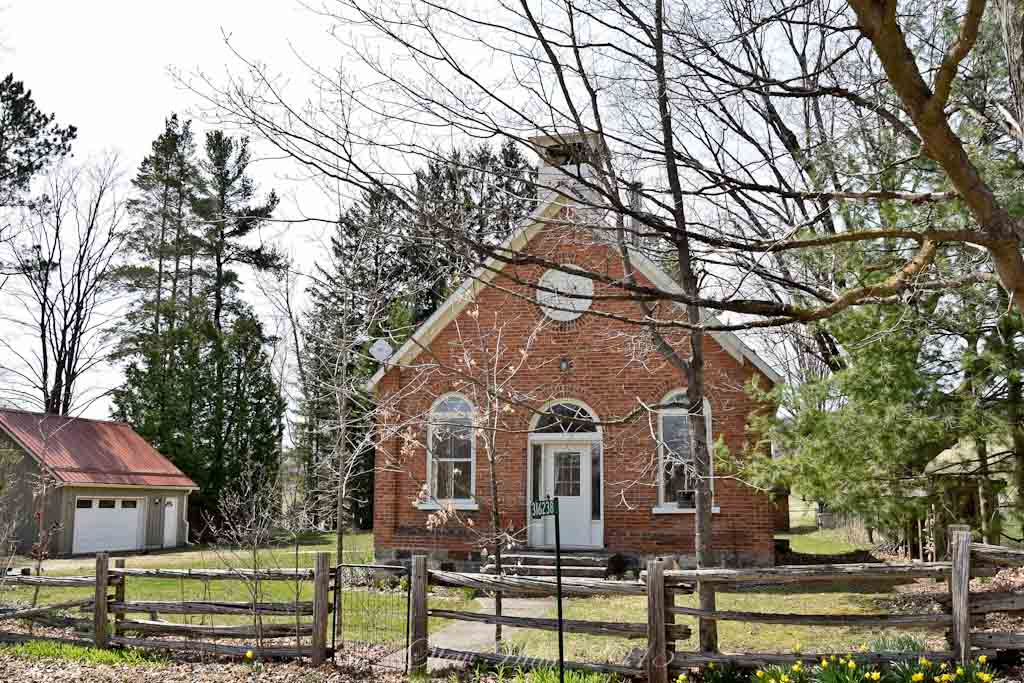
And one notable old two-room schoolhouse, now also a residence.

And thus ended our Sunday afternoon drive.


Friday, April 29, 2022

Our Sunday Afternoon Drive, Continued

We were down in the swamp when I left you, listening unsuccessfully for frogs calling.  But there were several other things that caught my attention.  We drove across the narrow bridge and turned at the corner.  This is a popular put-in spot for canoeists, in the middle of a canoe route through the swamp, and the parking spots off the road were full - in April!

A nice view of the swamp we were leaving behind.

A closer shot shows the open channel of the river in the background, a route I've canoed several times in the past.

There are obviously beaver that live in the area, though they are probably what we call bank beaver, creating a home in the bank of the river rather than building a lodge in a pond.

The bark on this fallen willow caught Mrs. F.G.'s eye.

While I really struggled to get an appropriate exposure for these bright yellow Sweet Coltsfoot.

Along past the swamp and we passed this nice old one-room schoolhouse, now converted to a residence.
It's one of the better conversions I've seen, retaining its old belfry for the school bell and windows.

Turning around we headed up the long Epping hill and passed this beautiful old barn, much more easily visible in April.  This style of barn is called a 'monitor barn', though I've seen no explanation of why.  The raised central roof provides good ventilation for both animals and stored grain or hay.  I can only ever recall seeing two barns of this style.


Wednesday, April 27, 2022

Sunday Afternoon Drive

We always used to laugh at the couples out for a Sunday afternoon drive, just moseying about the countryside, slowing down traffic.  Now we're one of them and on a warm sunny day like last Sunday, it was wonderful!  We went in search of cranes, frogs calling, and Skunk Cabbage.  We found two of the three.

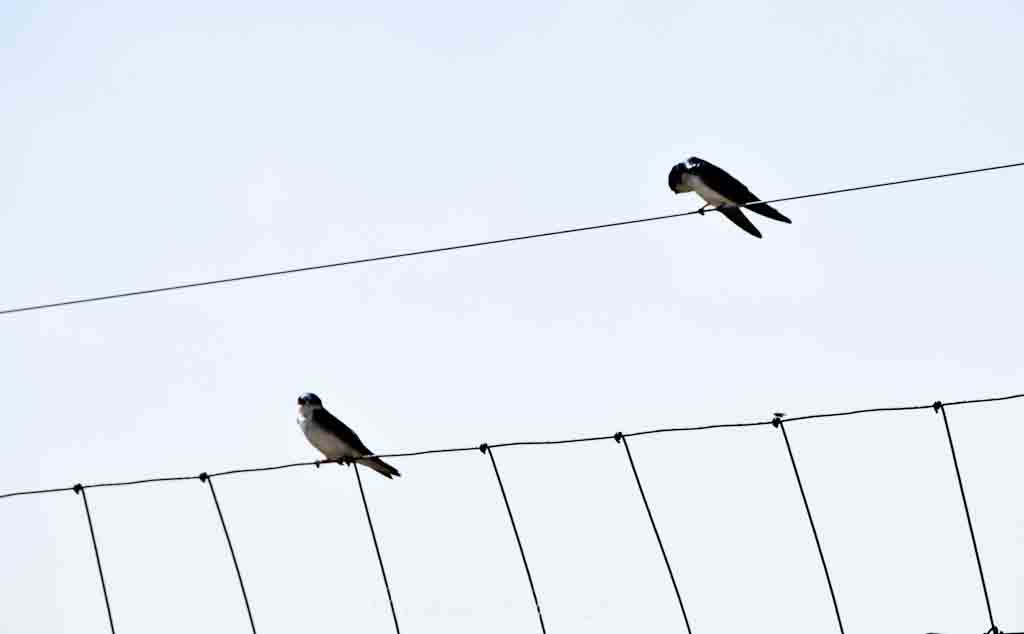
The first thing we stopped for was a pair of very blue Tree Swallows who have obviously claimed this nesting box.  Driving by you can easily mistake the flash of blue for Eastern Bluebirds.

A little further on we stopped to photograph these Pussy Willows, always a welcome sign of spring.

And off in the distance to the east there was still snow on some of the runs at Georgian Peaks, the north-westerly most ski club on Blue Mountain.

We ended up stopping and taking a good look at the large Red Price apple orchard just west of Clarksburg, noticing especially the large bulge at the rootstock grafts near the ground.  It makes quite a pattern looking through this very high density orchard.

So I got online today and started researching apple rootstocks and grafting.  It's a fair bit more complicated than I realized.  Apples are generally not grown from seed, because they won't be 'true-to-type'.  So to get an orchard of Red Prince you need to choose a rootstock and graft a 'scion' or healthy Red Prince twig onto the rootstock of every tree.  The scion determines the apple type.

The rootstock determines the relative size of the tree, from dwarf to standard.  They need to be held up by trellising, especially once they are laden down with fruit.  The bulge is the location of the graft.  I've looked to find out why the bulges here are so prominent, but the only thing I can come up with is that there are still several types of rootstock among dwarf trees bred for resistance to cold, fire blight, insects and disease, and woolly apple aphid.  

Most breeding and research comes from universities or agricultural research stations like Cornell in New York, or Malling in England..  In our case the Vineland Research Station of the Ontario Ministry of Agriculture and Food is important.  Dwarf trees do tend to fruit earlier, after only 2 or 3 years, but research has not determined exactly why this is.

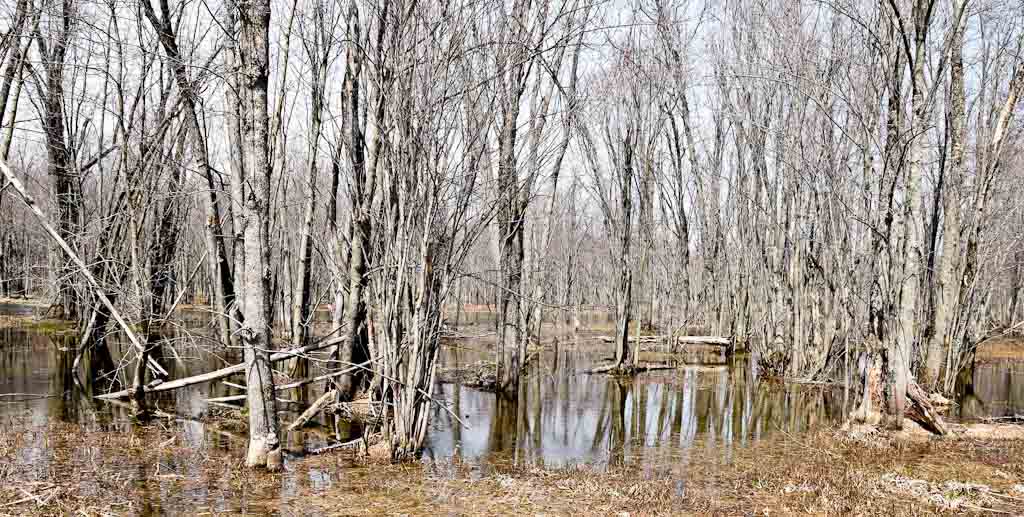
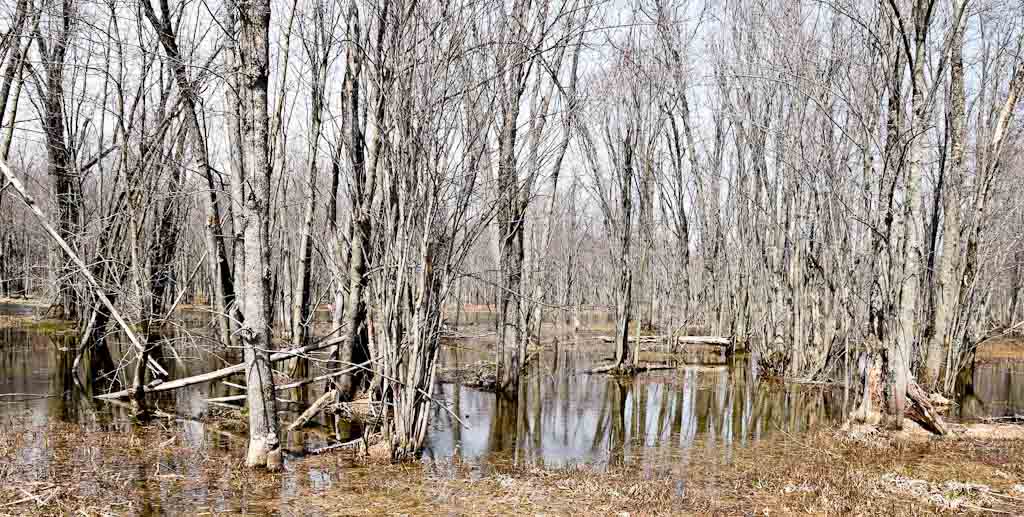
We carried on down to the Epping Road through the Beaver Valley swamp, a place where we hoped we'd hear frogs calling.  We didn't, but the reflections among the Silver Maples were good for a picture.

Along with some dry seed heads of last year's Queen Anne's Lace.  Part 2 tomorrow or the next day.